Mostrando entradas con la etiqueta toña. Mostrar todas las entradas

Toña, the Easter cake of Alicante


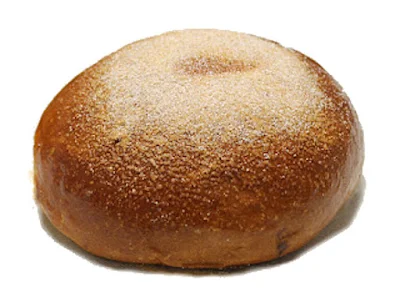
La Toña (the "ñ" can be pronounced as "ny" or "ni") from Alicante (south of Valencia, Spain)  is a typical Easter cake that has a peculiar appearance: well toasted on the outside but soft and fluffy on the inside. In fact, much of its grace is the contrast between the exterior and the interior. 

To achieve a spongy heart, a fermentation process alternated with kneading must be followed. Although you can make a Toña of a certain size if they are made individually and it is easier to get it right the first time. Then, with the experience gained, you can try making a bigger one. The toña can be eaten as is or add an egg and some decoration to make an Easter cake and as such it is given away especially in Alicante and neighboring provinces to the kids.

INGREDIENTS :

  • Half a kilo (1.1 lbs) of pastry flour
  • 150 ml (3/4 cup) whole milk
  • 100 grams (3.5 oz) of sugar (+100 grams/3.5 oz to sprinkle on the outside)
  • 4 eggs
  • 50 ml (1/4 cup) of extra virgin olive oil (also it works with simple olive oil)
  • 20 grams (1 tbps)  of fresh yeast (the one that should be kept in the refrigerator)
  • A pinch of salt
  • 1 lemon

In the microwave we heat the milk so that it is lukewarm. We dissolve the yeast in it and reserve it to grow (in a warm place, without light, for half an hour).

In a large bowl, mix the sifted flour with the sugar and the grated lemon peel. Beat the eggs and add them to the flour, stirring constantly. We also add the oil in the same way and the pinch of salt.

Let's then pour the milk to which we have added the yeast, mix with a spoon or with our hands and when it is homogeneous and somewhat sticky, cover it with a cloth and let it rest for 1 hour.

After the time has elapsed, sprinkle a flat surface with flour and knead vigorously until it is no longer sticky and is homogeneous.

Again we cover for a second fermentation, this time for 2 hours.

Then we divide the dough between 6 and 8 equal portions, according to your criteria. Preheat the oven to 60 degrees (140 F) and introduce them for 1 hour. With this step we will achieve an almost perfect fermentation necessary to ensure that it is very fluffy.

Next, we extract them and without letting them cool too much (you cover them, for example), we preheat the oven to 200 degrees (392 F). Sprinkle the toñas with plenty of granulated sugar and leave for 20 minutes. With that they will be well toasted on the outside but soft and fluffy on the inside.

Serve it at room temperature and enjoy !

Toña


La Toña alicantina es un bizcocho típico de la Semana Santa que tiene un aspecto peculiar : bien tostado port fuera pero suave y esponjoso por dentro. De hecho gran parte de su gracia es el contraste entre el exterior y el interior. 

Para conseguir un corazón esponjoso se debe seguir un proceso de fermentación alternado con el amasado. Aunque se puede hacer una toña de cierto tamaño si se hacen individuales es más fácil que salga bien a la primera. Luego ya, con la experiencia adquirida, se puede probar con hacer una más grande. La toña se puede comer tal cual o bien añadir un huevo y algo de decoración para hacer una mona de Pascua y como tal se regala sobretodo en Alicante y provincias limítrofes.

INGREDIENTES :

  • Medio kilo de harina de repostería
  • 150 ml de leche entera 
  • 100 gramos de azúcar (+100 gramos para espolvorear por fuera)
  • 4 huevos
  • 50 ml de aceite de oliva virgen extra
  • 20 gramos de levadura fresca (la que se debe conservar en frigorífico)
  • Un pellizco de sal
  • 1 limón

En el microondas calentamos la leche para que quede tibia. Disolvemos en ella la levadura y reservamos para que crezca (en un lugar templado, sin luz, durante media hora).

En un bol grande mezclamos la harina tamizada con el azúcar y la ralladura de la piel del limón. Batimos los huevos y los incorporamos a la harina sin dejar de remover. Añadimos también el aceite de la misma manera y el pellizco de sal.

Vertemos entonces la leche a la que hemos añadido la levadura, mezclamos con una cuchara o con la manos y cuando está homogénea y algo pegajosa, la cubrimos con un paño y la dejamos reposar 1 hora.

Transcurrido el tiempo espolvoreamos una superficie plana con harinas y amasamos con fuerza hasta que deje de estar pegajosa y se muestre homogénea.

De nuevo cubrimos para un segundo fermentado, esta vez durante 2 horas.

A continuación dividimos la masa entre 6 y 8 porciones iguales, según vuestro criterio. Precalentamos el horno a 60 grados y las introducimos durante 1 hora. Con este paso conseguiremos una fermentación casi perfecta necesaria para asegurar que queda bien esponjoso.

A continuación las extraemos y sin dejar que se enfríen demasiado (las cubrís, por ejemplo) , precalentamos el horno a 200 grados. Espolvoreamos la toñas con abundante azúcar granulado y dejamos durante 20 minutos. Con eso quedarán bien torradas por fuera pero suaves y esponjosas por dentro.