Mostrando entradas con la etiqueta Scaccia. Mostrar todas las entradas

Scaccia, the sicilian roll

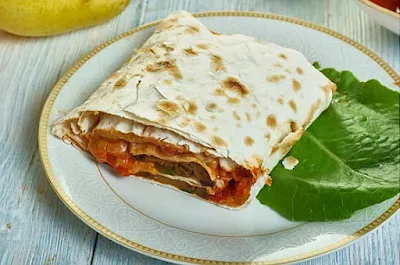
Scaccia is a Sicilian recipe that originated in Ragusa, in the south of the island, but is consumed in almost all of Italy. It consists of a dough that is rolled over a filling that can be very varied - there are few fixed rules - and that is baked so that it takes on a firm consistency caused by the melting of the cheese that it always incorporates.

The most common fillings are cheeses - mainly caciocavallo and pecorino -, vegetables (potatoes, aubergines, onions, etc.) but also meats such as sausages.

There are several versions of the Scaccia depending on its size. Smaller versions are sold at street stalls, as well as in bars and restaurants, but are also made large for home consumption.

We are going to make the usual version that is made in Syracuse, another Sicilian city, which uses potato, parsley and caciocavallo. Caciocavallo is an Italian cheese with a very characteristic shape that originated in Sicily but is now produced throughout Italy. If you can't find it, you can use some semi-cured cow or sheep cheese. It is a family version - big size - and the portions are cut for each diner.

INGREDIENTS (4 people) :

For the dough

  • 500 grams (1.1 lbs) of hard semolina flour*
  • 30 grams (1 oz) of fresh yeast
  • A cup and a quarter of warm water (250 ml)
  • 1 tablespoon extra virgin olive oil
  • 1 teaspoon salt
  • 1 teaspoon granulated sugar

* A lot of attention to this detail. We are not talking about "normal" flour, but about the one used to make pasta (macaroni, spaghetti, etc). Therefore, we must obtain this type of flour in specialized stores - all Italian product stores have it - or make it ourselves using a food processor and turning the couscous or bulgur  that we find into flour, which is also semolina.

For the filling

  • 4 tablespoons extra virgin olive oil
  • 200 grams (7 oz) of caciocavallo cheese
  • 200 grams (7 oz) of crushed tomato pulp
  • 200 grams (7 oz) of potato
  • 1 large onion
  • 1 sprig of parsley
  • Salt
  • Black pepper

On a work surface we place the flour in the form of a volcano and in the center we pour the yeast dissolved in the water with sugar. We begin to knead and then add the salt. We must knead until the dough becomes homogeneous, elastic and soft. Let the yeast act for approximately 1 hour, leaving it in a dark and warm place.

While the dough rises we can prepare the filling.

First we boil the peeled potatoes until they are soft but not excessively. We must be able to cut them into slices without them falling apart. Let them cool and cut fairly thin. Season and reserve.

In a frying pan at medium power with olive oil, add the onion cut into julienne strips. When transparent, add the tomato and let it cook for about ten minutes until the water it contains reduces. Season with salt and pepper and set aside, letting cool.

Spread the dough on a flat surface covered with baking paper and flatten it with a rolling pin until you get a thin rectangle.

We paint the surface with the mix of onion and tomato.

Place the potato slices on top of it until the tomato is covered.

We place pieces of caciocavallo - or similar cheese that you find - and finally sprinkle with plenty of chopped parsley.

It is time to start rolling the dough.

On the long side of the rectangle we begin to roll the dough over the ingredients, building a spiral which we should not force so that it has a perfect circular shape, but rather the shape at the end is a bit elliptical due to the nature of the filling (mainly because of the the potato).

We close the scaccia although it is not necessary to seal it in any way since we are going to bake it with that closure placed below.

We move the scaccia with the baking paper to the oven preheated to 220 degrees (428 F) , baking for approximately 25 minutes. You will see that it takes on the color of the bread, which is ultimately what it is, a stuffed bread. The stuffing is not critical since it is already cooked.

Remove, let cool slightly and serve by cutting portions. It's fabulous.

Scaccia


La Scaccia es una receta siciliana con origen en Ragusa, al sur de la isla, pero que se consume en casi toda Italia. Consiste en una masa que se enrolla sobre un relleno que puede ser muy variado - hay pocas reglas fijas - y que se hornea para que tome una consistencia firme propiciada por el fundido del queso que siempre incorpora.

Los rellenos más habituales son como se ha dicho los quesos - mayoritariamente caciocavallo y pecorino - , las verduras (patata, berenjena, cebollas etc) pero también con carnes como pueden ser salchichas.

Hay varias versiones de la Scaccia atendiendo a su tamaño. Se venden en puestos callejeros versiones reducidas, al igual que en bares y restaurantes, pero también se hacen "familiares" para el consumo en los hogares.

Vamos a hacer la versión habitual que se realiza en Siracusa, otra ciudad siciliana, que emplea patata, perejil y caciocavallo. El caciocavallo es un queso italiano con una forma muy característica originario de Sicilia pero que ahora se produce en toda Italia. Si no lo encontráis podéis emplear algún queso de vaca u oveja semi curado. Es una versión familiar y las porciones se cortan para cada comensal.


INGREDIENTES (4 personas) :

Para la masa

  • 500 gramos de harina de sémola dura*
  • 30 gramos de levadura fresca
  • Un vaso de agua tibia (250 ml)
  • 1 cucharada de aceite de oliva virgen extra
  • 1 cucharadita de sal
  • 1 cucharadita de azúcar granulada
* Mucha atención respecto a este detalle. No estamos hablando de harina "normal" si no de la que se emplear para hacer pasta (macarrones, spaghetti etc). Por tanto debemos conseguir este tipo de harina en comercios especializados - todas las tiendas de productos italianos la tienen - o bien hacerla nosotros mismos usando un procesador de alimentos y convirtiendo en harina el cus-cus que encontremos y que también es de sémola.

Para el relleno

  • 4 cucharadas de aceite de oliva extra virgen
  • 200 gramos de queso caciocavallo
  • 200 gramos de pulpa de tomate trituradas
  • 200 gramos de patata
  • 1 cebolla grande
  • 1 rama de perejil
  • Sal
  • Pimienta negra

Sobre una superficie de trabajo colocamos la harina en forma de volcán y en el centro se vierte la levadura disuelta en el agua con azúcar. Comenzamos a amasar y luego agregamos la sal . Debemos amasar hasta que la masa se torna homogénea , elástica y suave. Dejamos que actúe la levadura durante 1 hora aproximadamente, dejándola en un lugar oscuro y cálido.

Mientras sube la masa podemos preparar el relleno.

Primero hervimos las patatas ya peladas hasta que quedan blandas pero no excesivamente. Debemos poder cortarlas en rodajas sin que se desmoronen. Las dejamos enfríar y cortamos bastante finas. Salpimentamos y reservamos.

En una sartén a media potencia con aceite de oliva incorporamos la cebolla cortada en juliana. Cuando transparenta añadimos el tomate y dejamos hacer unos diez minutos hasta que reduce el agua que contiene. Salpimentamos y reservamos, dejando enfríar.

Extendemos la masa en una superficie lisa cubierta de un papel de hornear y la aplanamos con el rodillo hasta conseguir un rectángulo de poco grosor.

Pintamos la superficie con el tomate encebollado.

Encima del mismo colocamos las rodajas de patata hasta cubrir el tomate.

Colocamos trozos de caciocavallo - o queso similar que encontréis - y finalmente espolvoreamos con abundante perejil picado.

Es el momento de comenzar el enrollado de la masa.

Por el lado largo del rectángulo comenzamos a enrollar la masa sobre los ingredientes, construyendo una espiral la cual no debemos forzar para que quede con forma circular perfecta, si no que la forma al final queda un poco elíptica por la naturaleza del relleno (principalmente por la patata).

Cerramos la scaccia aunque no es necesario sellarlo de ninguna manera ya que la vamos a hornear con ese cierre colocado abajo.

Movemos la scaccia con el papel de hornear al horno precalentado a 220 grados, horneando durante 25 minutos aproximadamente. Veréis que toma el color del pan, que es a fin de cuenta lo que es, un pan relleno. El relleno no es crítico puesto que ya está cocinado.

Extraemos, dejamos enfriar un poco y se sirve cortando porciones. Está de fábula, os lo aseguro.