- 250 gramos de harina de fuerza
- 50 gramos de mantequilla
- 50 gramos de azúcar
- 1 huevo XL
- 50 ml de licor de anís
- 1 limón
- Media sobre de levadura química tipo Royal (alrededor de 10 gramos)
We are going to make a savory swiss roll where the roll will be a mashed potato and the filling will be made up of cheese and ham, although it admits many other types: minced meat, mushrooms, vegetables, etc.
The potato roll is made in the same way as if we were making a gnocchi, only "family" size. Once stuffed, we will bake it instead of boil it like gnocchi, but due to its size it is not possible to finish it that way. You will see that it is very easy to do.
INGREDIENTS
for the roll
For the filling
Boil the potatoes whole and with skin until they are soft.
We take them out of the water and peel them, proceeding to pass them through the food mill or simply crush them with a fork.
Mix the sifted flour, the grated cheese and a beaten egg with the potatoes. We mix well.
Add half a teaspoon of salt and a pinch of ground black pepper.
Knead well until you get a flexible and somewhat sticky ball.
Place the ball on a baking paper. It will serve us to bake but also to make the arm roll.
With a rolling pin, flatten the ball until you get a flat dough 1 cm / 0.4 inches thick (it is important that it has exactly this thickness, neither more nor less).
We tried to give it a rectangular shape, more or less.
Cover the surface with slices of ham and place slices of cheese on them. Finally sprinkle the grated cheese.
Carefully and with the help of the baking paper, roll up the dough to enclose the filling.
We paint the outside of the roll with egg (all this without removing the arm from the baking paper).
We preheat the oven to 180 degrees (356 F).
Introduce the arm and bake it for 20 minutes. Five minutes before the end we connect the grill so that it takes on a toasted color.
Remove from the oven and serve hot, cutting into sections.
Isn't it easy? Well, think of many other fillings and you will see that hundreds of variations can be made.
Esta es una de esas recetas que se han ido perdiendo y solo se realizan en el hogar (y tampoco demasiado). Es una lástima porque habiendo disponibilidad de garbanzos cocidos es tan fácil de hacer que vais a tardar más tiempo en leer el post que en cocinarlos.
Básicamente se trata de hacer un sofrito, añadir los garbanzos e incorporar una picada, además de huevo duro picado.
INGREDIENTES (4 personas)
Para la picada
Para el "topping"
En primer lugar hacemos la picada.
Freímos el pan en una sartén con aceite y cuando está dorado lo llevamos a un mortero.
Añadimos el diente de ajo sin el germen, las almendras y las avellanas, las hojitas de la rama de perejil, un poco de sal y una cucharada de aceite de oliva virgen extra.
Majamos bien hasta que conseguimos una pasta. Reservamos.
En segundo lugar cocemos los huevos para que queden duros (12 minutos a contar desde que el agua rompe a hervir). Recordad que los huevos se cuecen partiendo de agua fría con un chorro de vinagre y una cucharada de sal (la sal sirve para que sea más fácil pelarlos).
Una vez cocidos retiramos, pasamos por el chorro de agua fría del grifo y pelamos. A continuación picamos muy finos. Reservamos.
En una sartén con un chorro de aceite de oliva pochamos la cebolla y los ajos tiernos bien picados. Dejamos hacer hasta que la cebolla transparente. En ese momento añadimos el tomate triturado.
Cuando el sofrito ha ligado (parece una crema), añadimos los garbanzos, revolvemos con el sofrito y entonces incorporamos el vaso de vino.
Dejamos cocer unos minutos para que se evapore el alcohol y entonces vertemos por encima la picada. Removemos bien y dejamos hacer unos 5 minutos. Rectificamos de sal y poco antes de apagar el fuego espolvoreamos por encima los huevos picados. Hay gente al que le gusta mezclarlos con el resto y otros que lo dejan por encima como si fuera un "topping", va a gustos.
Si veis que queda muy seco, que se ha evaporado demasiado el vino, se añade caldo de verduras o un poco de agua. Hay gente que los come caldosos y otros que los prefieren más bien secos. Tampoco es raro que haya gente que les ponga butifarra, panceta o incluso bacalao. En este caso hemos optado por la versión tradicional.
Ya veréis al probarlo por qué es una lástima que se pierda esta receta.
This cake or sponge cake is very popular in Rhineland-Westphalia and North Germany. It is the cake that is usually ordered in cafeterias to accompany tea or coffee, what the Germans call the "kaffezeit", the time in the afternoon when they go to the nearest cafeteria.
It belongs to a type of cakes that are covered with the so-called "streusel", a mixture of flour, butter and sugar that you have probably eaten more than once, ignoring that it is a German invention.
Often the streusel is enriched with nuts as we are going to do next, in this case by adding almonds (so the name would be butterkuchen mit mandel, where mandel means almond).
It is usually made in shallow trays.
INGREDIENTS
First you have to heat the milk until it is lukewarm. Then add the crumbled yeast and reserve.
In a large bowl add the flour, 50 grams (1.8 oz) of sugar, 100 grams (3.5 oz) of melted butter (that we have melted in the microwave, for example), the beaten egg and the mixture that we have made at the beginning of yeast and milk. Mix well and knead to form a smooth and homogeneous dough.
Cover the bowl with a cloth and place it in a warm place, without much light and free from drafts. In 1 hour it will have doubled the volume. Once the time has elapsed, we must take the dough to the mold that is used with the butterkuchen. Said mold is a tray of about 40 x 40 cm (16 x 16 inches), not very deep (about 2 cm~0.9 inches). If you can't find it, use a baking dish that is at least the size indicated, filling it halfway. We spread the mold with melted butter to facilitate unmolding (unless it is silicone, which would not be necessary).
Pour the dough into the mold and flatten it. So, pay attention to this, with the four fingers of the hand we make holes in the dough so that we touch the bottom of the tray. Make them throughout the dough, at spaces as regular as possible. This is very important.
We cut the rest of the butter (150 grams ~ 5.3 oz) into small cubes that we place in each of the holes that we have made with our fingers. Then sprinkle the sliced or chopped almonds all over the surface, doing the same with the 130 grams (4.5 oz) of sugar.
This mixture of almonds, sugar and butter is the streusel of the cake. Let rest for half an hour for the dough to rise again.
Preheat the oven to 200 degrees (390 F) and introduce the cake for about 20 minutes, until it is visibly done.
We extract and cut directly from the tray, it is not usually unmolded. If everything has gone well, the cake will be soft and the surface will be crispy with the sugar and almonds.
Probably this recipe is unknown for you unless you are Italian. Krumiri are a type of cookie that is eaten as is or dipped in zabaglione or thick chocolate. They are unmistakable due to their appearance and their strong vanilla aroma. The krumiri were created in 1878 in Casale Monferrato, a city in Piedmont. Although the recipe is considered Piedmontese heritage, being protected by copyright, unless you buy them from the bakery where they originated, the rest of the recipes are only approximations.
Seamos positivos e imaginemos que este año por fin, del 1 al 7 de mayo va a ser posible celebrar como antes la Feria de Sevilla. De ser así podremos degustar los famosos buñuelos que con un buen chocolate son lo mejor para reponer fuerzas. En cualquier caso, para los que no pueden esperar, para los que no pueden ir a Sevilla o para los que quieren buñuelos todo el año aquí va la receta que es muy sencilla de hacer.
INGREDIENTES :
* Algunos prefieren sustituir el agua por la leche porque así, dicen, les quedan más sabrosos. Va a gustos.
En primer lugar templamos el agua en el microondas (unos segundos bastarán). Una vez templada vertemos en ella la cucharada de azúcar y la levadura seca de panadero. Removemos y dejamos reposar en un lugar cálido, oscuro y sin corrientes de aire. Dejamos reposar media hora.
Vertemos el agua en un bol grande y añadimos la harina bien tamizada así como un pellizco de sal. Removemos bien hasta que queda una pasta homogénea con la consistencia de una papilla densa. Si tenéis una amasadora o mezcladora - la del robot o la de una panificadora -, usadla. En caso contrario, varillas.
Dejamos reposar la masa obtenida durante media hora.
En una sartén o cazuela honda vertemos aceite para obtener al menos 3 dedos de profundidad.
Llevamos al fuego a potencia media. El aceite no debe estar a punto de humear ni tampoco estar templado.
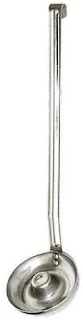
Ahora vamos a emplear la buñolera. La buñolera es casi idéntica a un cazo de sopero pero cuenta con una protuberancia en el centro que sirve para dar forma a la rosquilla y la base es plana para poder apoyarla en el fondo de la sartén sin cansarse. Basta con llenar el cazo con la masa líquida que hemos obtenido pero no del todo, de manera que al crecer no se cierre el agujero (yo lo lleno por ejemplo a 2/3 o 3/4). Podéis encontrar buñoleras desde 5 hasta 20 euros, habiéndolas dobles para hacer dos buñuelos a la vez.
Con la buñolera conteniendo la masa, la sumergimos en el aceite caliente. En un determinado momento el buñuelo se desprenderá del cazo y comenzará a flotar. En ese momento lo dejarmos unos segundos y le damos la vuelta con un toque suave hecho con un tenedor, por ejemplo, de manera que se dore bien por ambos lados.
Una vez dorado (ojo, que no quede oscuro) lo sacamos y dejamos escurrir el aceite sobrante en una rejilla o mejor sobre papel absorbente de cocina.
A continuación los dejamos enfriar un poco y o bien los rebozamos en azúcar glass o en azúcar granulado, al gusto.
Más fácil de hacer imposible, para celebrar la Feria de Sevilla en casa cuantas veces queráis.
The bombocado is a Brazilian sweet heir to another Portuguese but adapted to the existing ingredients in America. The name is easy to translate into English: Good bite.
In addition to being a "good bite", it is very easy to make.
INGREDIENTS (4/5 people):
First, in a saucepan over medium heat, bring the water to a boil and dissolve the sugar in it, stirring constantly.
When the sugar has completely dissolved, remove from the heat.
Immediately add the grated coconut and cheese. Return the pan to the heat and stir until the mixture thickens.
We lower the fire to a minimum. We add the butter and the flour previously sifted so that it does not make lumps, very little by little. Stir until a homogeneous mass remains.
Remove from heat and let cool. When it is cold - or at least lukewarm - add the eggs one by one, not introducing the next until the previous one has been integrated into the dough.
Now it's time to bake. We preheat the oven to 200 degrees (390 F) and here there are two options: pour the dough into individual molds or into a family container that we will later cut to serve the portions.
Put it in the oven and after about 30 minutes it will be ready. We check from time to time that it is curdled by inserting a toothpick and if it comes out dry, ready, whether or not the indicated time has elapsed.
It is served alone or accompanied by a little whipped cream. You will see it deserves its name.
Esta receta me la ha cedido Ayshe Molina quien a su vez se ha basado en una ensalada que hasta no hace mucho estaba disponible en la cadena de restaurantes Viena.
La he titulado de esta manera porque si vas a preparar una comida a alguien que quieres por San Valentín, no hay nada mejor que darle algo saludable y a la vez sabroso. Mucho mejor, dónde va a parar, que un pastel con forma de corazón cargado con medio kilo de mantequilla, por mucha forma de corazón que tenga.
INGREDIENTES (4 personas)
En primer lugar coceremos las verduras y la quinoa que deban ser cocidas, las mezclaremos con el resto de ingredientes que se consumen frescos para luego añadir hummus de remolacha y finalmente sazonaremos con una vinagreta de miel.
Edamame :
Colocamos al fuego una olla con al menos 2 litros de agua y llevamos a ebullición. Cuando el agua hierve a borbotones, no antes, los vertemos en la misma y dejamos hacer con fuego fuerte durante 4 minutos. Una vez ha transcurrido el tiempo los sacamos y llevamos a un bol con agua fría casi helada. Reservamos.
Tirabeques :
Se cuecen exactamente igual que el edamame, por lo cual podemos aprovechar el mismo agua donde hemos hervido estos. Simplemente cuando retiramos el edamame añadimos los tirabeques y dejamos unos 4 minutos para luego llevarlos a agua fría casi helada. Deben quedar tiernos pero crujientes. Al dente, por emplear un símil que se emplea con la pasta. Reservamos.
Judía verde redonda :
Exactamente igual que hemos operado con edamame y tirabeques, aunque en este caso cociendo durante 5 ó 6 minutos. Agua fría y reservar.
Kale :
Si tenéis suerte y encontráis ramas tiernas de kale perfecto porque no requieren cocción. Pero si son demasiado duras las podéis cocer en el mismo agua empleado con anterioridad hasta que se ablandan (alrededor de 7 minutos). Recordad que las verduras están hechas cuando se ablandan pero aún son crujientes. Demasiado blandas pierden todas sus propiedades.
Quinoa :
Lavamos la quinoa en abundante agua corriente del grifo colocándola en un colador. Una vez hemos eliminado la saponina que le da un sabor amargo la cocemos en el mismo agua empleada anteriormente durante 15 minutos. Como ya no vamos a necesitar más agua hirviendo, la volcamos de nuevo sobre el colador y recogemos la quinoa ya cocida. Dejamos enfríar y reservamos.
Para hacer el hummus de remolacha :
En el vaso de la batidora vertemos los garbanzos cocidos, la remolacha pelada y cortadas en rodajas así como el zumo de medio limón y cuatro cucharadas de aceite además de una cucharadita de sal. Batimos hasta que queda sin grumos y suave.
Si utilizamos remolacha en vinagre, operamos igual escurriendo al máximo la salmuera avinagrada y ya no añadimos el zumo de limón porque entonces quedaría demasiado ácido.
Vinagreta de miel y mostaza :
En un bol mezclamos 4 cucharadas de aceite virgen extra de oliva, 1 cucharada de vinagre de vino, 1 cucharada de miel (mejor ablandarla ligeramente en el microondas) y otra de mostaza fuerte. Mezclamos bien y reservamos.
Ya podemos montar la ensalada :
En cada plato colocamos de base las ramas de kale. Luego la quinoa, los tirabeques y el edamade, así como la judía redonda.
Con una mandolina o un cuchillo afilado hacemos tiras finas de la col violeta y la colocamos encima.
Sazonamos todo con la vinagreta de miel.
Vertemos unas cucharadas de hummus de remolacha. Espolvoreamos por encima algunos anacardos fritos y perejil picado.
Listo para comer. Una pasada, ¿verdad? Pues además de bueno, sanísimo.
Jaca is a Huesca city that many know for its enormous connection with high mountain sports, especially because of its proximity to the Pyrenees. The city is located in a valley in a valley that facilitates communications between Aragon and Navarra, as well as being a milestone on the Camino de Santiago.
The gastronomy of Jacetania (the region that surrounds it) is very interesting, highlighting game meat and lamb. The sweets also have a wide repertoire, highlighting above all the Lazos de Jaca.
Lazos de Jaca are very easy to make and above all to remember the recipe, since they are made with very few ingredients. It is the typical sweet that by doing it a couple of times you repeat it without even having to check the recipe.
It involves making very simple bows and then dipping them in royal glaze. It can't be easier !
INGREDIENTS :
For the puff pastry bows
For the royal glaze
On a baking paper we spread one of the puff pastry sheets. Remember that if you buy it frozen, it should be left to defrost overnight in the refrigerator, not outside.
We paint the entire surface, using a brush or similar, with a layer of condensed milk. Then place the other sheet of puff pastry on top. That is, as if we made a sandwich filled with condensed milk.
Then we cut the two plates into elongated rectangles of the length we want. They can be long or short puff pastry bows. If you are going to bathe them in the royal icing, adjust the size to the container where you make the glaze so they fit.
Separate the rectangles from the plates.
To give it the shape of a bow, you can simply press the center of the rectangle so that the ends are joined or rotate it through the center.
Preheat the oven to 150 degrees (300 F) and insert the puff pastry bows, constantly watching so they don't burn. The normal baking time is between 10 and 15 minutes.
Don't do anything while the bows are baking, because they could burn if you don't pay enough attention to them. Once done, they are removed and allowed to cool to room temperature.
Now we are going to make the royal glaze
To do this, beat the egg, icing sugar and a teaspoon of lemon juice in a bowl with a whisk. It has to be beaten for a long time, so if you have the electric rods it is time to use them. It is best to add the icing sugar little by little until the icing is of sufficient consistency to hold the rods upright.
If you want the glaze to be a deep yellow color - as it appears in the photo - you must add a few drops of yellow food coloring. If you don't want to use this dye, you can use the yolks of two large eggs instead of a single egg, although in this case you will have to add a tablespoon of water to reduce the viscosity. With the yolks it will be a little more yellow, although not like in the photo.
Now you have two options: either we paint the bows with the icing using a brush or, if we want them very covered on all sides, we submerge them one by one and then let them drain on a rack. What is most comfortable for you. Again, the ones in the photo have been made by dipping them in glaze
They are left in the air so that the glaze hardens - it takes 2 or 3 hours - and they are ready to eat.
Trick: so that they can be painted well, do not let the little bows you have made cool completely. If they are warm it is much better and it also dries the glaze before.
A delight that you will repeat more than once. And a good additional reason to visit Jaca, of course.
A pesar del nombre la tarta no es rusa aunque sí que es típica de la ciudad de Verona en Italia. El nombre es posible que o bien pueda proceder de la forma que posee, parecida al gorro de piel que emplean los pastores rusos, o bien se deba a un cocinero veronés que la creó al conocer a una rusa de ojos azules. No se sabe con certeza, son medio leyendas que circulan cuando no se sabe muy bien la razón de las cosas.
En cualquier caso se ha convertido en la tarta típica para expresar amor y supongo que el próximo lunes, San Valentín, las pastelerías veronesas se van a hinchar a vender tartas rusas (de hecho el nombre "largo" de la tarta es "tarta rusa del enamorado de Verona"). Se da también la circunstancia que Verona es la ciudad de Romeo y Julieta, así que aquí el amor rezuma por todas partes.
Aunque se sabe que los Capulettos y los Montescos existieron - las dos familias enfrentadas en la Verona medieval - no hay constancia alguna de que Julieta y Romeo fueran personajes históricos. De hecho se cree que nunca fueron reales, más bien una aproximación romántica que resaltaba aún más una rivalidad sangrienta. Si el cocinero que inventó la tarta tampoco lo hizo por amor a una rusa, entonces ¿por qué es la tarta del amor?
Lo más probable es que se conozca como tal porque en su composición lleva amaretto, un licor al que siempre se ha otorgado dones afrodisiácos. El amaretto es un licor de hierbas de sabor ligeramente amargo con origen en la localidad de Saronno (de hecho a menudo se le llama Amaretto di Saronno). Aunque existen referencias al mismo muy antiguas, no fue hasta el siglo XIX cuando comenzó su comercialización. Parte del éxito radica en la original botella que lo hace fácilmente distinguible.
La tarta rusa es un hojaldre que encierra un relleno de almendras y amaretti (galletas almendradas) que se aromatiza con licor. Es muy fácil de hacer.
INGREDIENTES
* Los amaretti, como ya se ha dicho, son unas galletas de almendras muy populares en Italia. Si no encontráis se puede emplear mazapán o bien almendrados de los típicos que encontramos en España.
En primer lugar picamos las almendras crudas muy finas. Hacemos lo mismo con los amaretti, triturándolos al máximo. Mezclamos ambos con la mitad del azúcar ( 50 gramos).
En un bol batimos los huevos con los otros 50 gramos de azúcar y la mantequilla a punto pomada. Cuando tengamos una crema añadimos el licor amaretto, la harina tamizada y la levadura química. Mezclamos bien y luego le añadimos los amaretti triturados.
En una molde de unos 22 cm de diámetro colocamos la pasta de hojaldre. En el centro vertemos la masa que hemos obtenido al principio y lo que sobra de hojaldre por los laterales lo doblamos hacia el interior (si tenéis duda al respecto, fijaos bien en la imagen que encabeza esta receta).
Si queremos podemos colocar almendra fileteada por encima, aunque es totalmente opcional y las que se venden en Verona, si no recuerdo mal, no suelen llevar.
Precalentamos el horno a 160 grados e introducimos el hojaldre durante unos 45 minutos. Comprobad antes de sacarlo que está bien cuajado.
Se deja enfriar y se cubre con azúcar glass. Se suele servir a temperatura ambiente y a menudo acompañada de nata montada.
Es una de esas tartas que repites constantemente de lo buena que está.
On the Andalusian coast, mainly in Malaga, clams are served with a slightly spicy sauce made with onion, garlic, white wine and paprika, among other simple ingredients that make the dish very tasty.
INGREDIENTS (4 people) :
Put the clams in a pot with plenty of salted water (2 or 3 tablespoons) so that they open and release the sand. It is convenient to change the water two or three times keeping the clams submerged. 4 or 5 hours will be more than enough.
In a saucepan over medium heat, pour the cups of wine and introduce the clams so that they open. From the moment the wine boils, it will take about 5 minutes to open them all, with the pot covered. The ones that haven't opened after a while should be thrown away because it means they were already dead when they were picked, and it's not a good idea to eat them.
Once the clams are open, remove them reserving the remaining broth.
In a pan, pour a generous splash of olive oil. Sauté the finely chopped onion and garlic over medium heat, with a pinch of salt so that the onion sweats. We also add the chopped chilli -without the seeds-. Then we add the sifted flour and when it is fried, the broth that we have previously obtained by opening the clams with the wine.
Once the sauce is made, add the paprika and chopped parsley leaves, stirring for a minute. Finally, add the clams to the sauce and let them cook for 5 minutes, moving from side to side so that the liquid penetrates the shells. A little before the end we rectify salt and pepper.
Prepare bread because the sauce is delicious!
Ignoro cuál es la procedencia exacta de esta receta pero la encontraréis en toda Alemania, siendo omnipresente en los buffets de ensaladas con los que muchos restaurantes invitan a los comensales a"construirse" su primer plato. Allí la denominan "gurkensalat" donde gurken significa pepino o pepinillo.
INGREDIENTES (4 comensales) :
* Si no tenéis crema agria se puede hacer con 200 ml de nata para cocinar al 18% de MG mezclada con el zumo de un limón. Se deja reposar una hora y ya tenéis crema agria.
Pelamos los pepinos y los cortamos en rodajas de unos 3 mm de ancho, vertiéndolos en un bol y los salamos ligeramente, dejándolos reposar durante 15minutos. Mientras el pepino saca agua en el bol hacemos la salsa mezclando el yogur con la crema agria, el vinagre, el eneldo picado, un pellizco de sal y un poco de pimienta molida.
Vaciamos del bol el agua que ha sacado el pepino y vertemos por encima la salsa que hemos confeccionado con la crema agria, procurando que con cuidado impregnen todas las rodajas.
Más fácil no podía ser.
El nombre de esta sopa en alemán se pronuncia fonéticamente en español como fankúgen-soupe. Ya se que el nombre es intimidante, es lo que tiene el alemán. Con decir Sopa de pan a la alemana es más que suficiente. La palabra"pfannkuchen" significa crepe en alemán y"suppe" está claro que es sopa.
Esta receta procede de la gastronomía suaba aunque en la actualidad es muy común en toda la cocina del sur de Alemania y en Austria. A veces se conoce como Flädlesuppe.
A grandes trazos consiste en realizar unas tortitas, panqueques o crepes, como queráis llamarlos, que se incorporan cortados en tiras a un caldo de carne. El caldo se puede especiar como se desee.
Dado que la tortita se añade una vez el caldo ya está caliente y a punto de ser servido, y por tanto no interviene en la realización de la sopa, se puede adquirir pan pita en vuestro supermercado habitual e incorporarlo una vez se ha tostado ligeramente en la sartén.
La forma más laboriosa de hacer la receta es cocinar por vuestra cuenta el panqueque.
Ambas opciones se explican a continuación.
INGREDIENTES (4 personas)
Para realizar los panqueques
Para la sopa
*La nuez moscada se puede añadir al panqueque si se hace a propósito para esta receta o bien al caldo si se adquiere el panqueque ya hecho. En cualquier caso no conviene abusar de esta especia ya que su sabor es muy fuerte.
En primer lugar mezclamos la leche con la harina, una vez tamizada, y los dos huevos de tamaño grande, además de la cucharadita de sal. Obtendremos una masa bastante líquida. Si queremos podemos añadir un pellizco de nuez moscada.
En una sartén anti-adherente de unos 16 cm de diámetro mojada con un poco de mantequilla, que hemos derretido a fuego medio-fuerte, vertemos un cazo de la mezcla hasta que cubra toda la base de la sartén.
Cuando los bordes comiencen a oscurecerse, le damos la vuelta para que se haga por el otro lado. Es conveniente que el panqueque quede algo tostado pero todavía flexible.
Hacemos tantos panqueques como nos permita la masa obtenida. Lo normal es que con las cantidades indicadas podamosobtener cuatro unidades.
Enrollamos los panqueques y los cortamos en tiras de un centímetro de ancho.
Reservamos.
Llevamos el caldo de carne a ebullición. Una vez está caliente incorporamos los saborizantes que nos apetezcan. Pueden ser cebollino cortado muy fino o bien perejil picado. A continuación añadimos las tiras de panqueque, dejamos reposar unos minutos y listo para servir bien caliente.
Podemos ahorrar tiempo evitando tener que hacer el panqueque añadiendo tiras de pan pita o tortitas de trigo o maíz que hayamos adquirido previamente en el supermercado, eso sí, previamente las tostaremos.